.jpeg)


Captain America and Billy The Kid’s Parade of Sound
The 1969 film Easy Rider is credited as the first widely noticed independent production. Peter Fonda and Dennis Hopper first encountered each other in 1961, at Hopper's wedding reception in New York. Fonda had known the bride since childhood and with a new husband, Fonda would be spending a lot of time with the newlyweds. Peter Fonda and Dennis Hopper found common ground through motorcycles and struggles in the film industry, and in a childlike way, the pair would grow up with the country experimenting with freedom, drugs, and art. Hopper, being more contemporary to New York, invested in Warhol pieces and immersed himself in photography. Fonda would be found outside of Pandora’s box with a gang of kids protesting on Sunset. Different sides of the same coin.
The artistic marriage and feud of the duo has long been told. However, there’s one piece that will always bind them; the duo’s involvement in the Laurel Canyon music scene. Fonda can even be heard quoting Buffalo Springfield on the Dick Cavet Show with the line “paranoia strikes deep” from the song For What It’s Worth. In a talk with Orson Welles, Welles questions Hopper about what he means by “you don’t need a weather man to know which way the wind blows”, a lyric from Bob Dylan’s Subterranean Homesick Blues.

Easy Rider would shatter Hollywood with one decision, the film wouldn’t use independent orchestral scores but the music of close friends. The first various-artist soundtrack featuring The Byrds, The Band, Jimi Hendrix, Steppenwolf, and others
The first song featured is Steppenwolf’s The Pusher, starting a pattern that would repeat through the film by using lyricism instead of dialogue. In this case, the song title gives you final confirmation of the scene and an understanding of exactly who Wyatt, played by Fonda, and Billy, played by Hopper, are. After the deal, the song would commence, setting the tense tone of paranoia flooding in after receiving payment. Steppenwolf returns for the second and final time with Born To Be Wild, as they take on the lower United States. The Colorado River can be seen as they cross the state line into Arizona, the two men bursting with freedom and a gas tank filled with cash.


The Byrds', Wasn’t born to Follow, seeps in like the light through the trees in New Mexico. The folksy song of liberation and exploration serenades the New Mexico scenery, with flashes of chaparral and desert. The song would return with the innocence of nude watering hole swimming, and prances through the prairie. At this point in the film, without the soundtrack’s lyrics, Easy Rider would be nothing more than scenery and engines rumbling.
The Band makes its appearance with The Weight, telling tales of aid and friendship as the duo pick up a hitchhiker. The Weight is made of dialogue: “He said, I will fix your rack if you'll take Jack, my dog I said, Wait a minute, Chester y'know I'm a peaceful man He said That's okay boy won't you feed him when you can?”. The hitchhiker takes them to his commune that lives off the land with no animals. The commune offers a meal and a place to rest, as if The Weight mimics parts of the film's events.
Midpoint in the film The Holy Modal Rounders' Bird Song adds to the jokey and simplistic ambiance of Jack Nicholson's character. After a parade, the duo meets Nicholson's character, George. George decides to hitch a ride to Mardi Gra, where Fonda's character asks, “Got a helmet?”. Nicholson's character can be seen on Fonda's bike in his old high school football helmet. The song doesn’t offer a title or lyricism to follow, but rather, an ambiance offering the foreshadowing of a country boy's first hit and high.
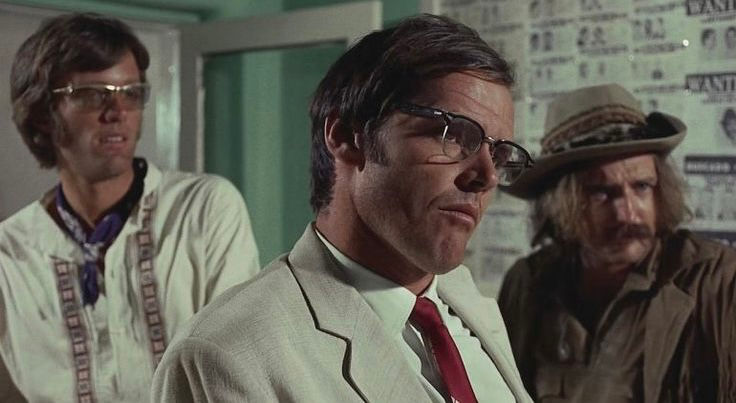
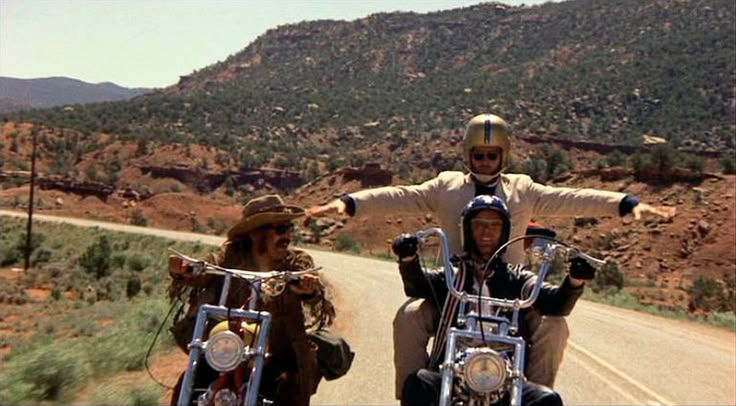
The Fraternity of Man’s, Don’t Bogart That Joint, fittingly starts during a bathroom break in what can be thought to be Texas. The three men lined up to relieve themselves, as the song pinpoints the scene with a country sound and a contradicting liberal topic. Hippies in the South.

The tension would return as they cross the state line into Louisiana, as Jimi Hendrix's If 6 Was 9 opening riff echoes the tension of the state's prejudices, to which the duo would fall victim. Film can typically be cited with colors to portray events and emotions, however, in Easy Rider's case, music can convey anything. Rock, folk, and pop are all an emotion, color, or story.
The most decadent part of the film is made to be the ultimate modern Last Supper, with meat, wine and brothels. Moroccan beads can be seen streaming, while The Electric Prunes', Kyrie Eleison, echoes, celebrating their arrival to Mardi Gras. The biblical undertones express the duo's contentment, satisfaction, and ultimate bliss. They have reached their haven.

The chaos can be felt fast approaching with The Electric Flag’s Flash Boom Pow, a composition previously used for the 1967 movie The Trip. The fast-paced psych orchestral rumbling leads you to the end of the film and the duo’s demise in Easy Rider.
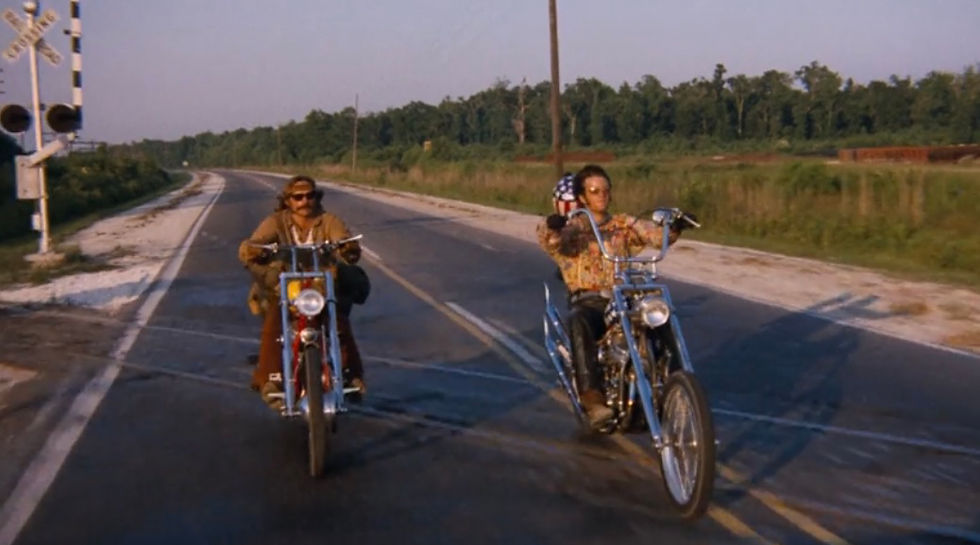
The film lacks dialogue and even reference popularity. Easy rider was made for Wyatt and Billy, whether that is felt in your conscience or a mirror of yourself. It is a film not made from a template, but through music, art, and lifestyle. The film was made similarly as Henry Diltz photography was; something made for friends and common people alike. Easy Rider is a home movie, that just so happened to break Hollywoods typical standards, and reinvent music in film, grossing 60 million worldwide.


Comments