


The Vamp in Velvet and Lace
Long before the word “groupie” became a label to define a specific archetype of woman associated with rock gods and promiscuous sex, there was the “vamp,” an alternative archetype of film long past. The vamp was seductive, and she was theatrical. Everything from her movements to her makeup was excessive, and irresistibly dangerous. The vamp did not fit comfortably into the traditional image femininity. She knew she was beautiful, and something to be desired, and this knowledge gave her power over men. Theda Bara came to embody this figure more than any starlet of the silent screen. Those heavily made up eyes, costumes made of golden silks and feathers and furs with massive headpieces, alongside a reputation for playing sexually predatory women created an iconic image, one that would circulate and remain ingrained in culture long after the destruction of her films.

Born Theodosia Goodman in Cincinnati in 1885, Bara became one of the biggest silent stars of the 1910s and 20s after Fox Studios transformed her into an exotic and mysterious character, crafting her screen persona to be sexually dangerous. Her breakthrough came with A Fool There Was (1915), where she first played the seductive vamp who lured a respectable man away from his family, in turn ruining his reputation and destroying his life. Her heavily kohl lined eyes and deliberately provocative image changed shy Theodosia Goodman of Cincinnati into Theda Bara, the defining face of the vamp. Most of what the public believed; and still continues to believe about Theda was manufactured by the studio, making her the earliest example of a female star whose public identity was not her own, but rather a reflection of the characters she played.
By the time the 1920s had arrived, the ideal pop culture woman was beginning to look very different from Theda Bara. The decade belonged to the flapper, young, modern, playful and independent, with Clara Bow defining the new “It Girl.” Bow bounced onto the scene with bobbed hair, youthful energy and a doe-eyed sense of mischievous sexuality that formed a new kind of femininity, which embraced modern life and change rather than fear it. This made Theda Bara’s earlier model of femininity and sexuality much more darker and sinister. Where the flapper was fresh faced and exuberant, the vamp was mysterious, hid behind heavy makeup and costumes, and was deliberately ‘too much’, while the flapper’s appeal was rooted in her warmth and closeness, a contrast to the vamp’s cold distance.

This dynamic of cold temptress and bubbly girl-next-door would prove remarkably durable. Although the silent generation disappeared, the vamp remained embedded in popular culture through Hollywood, pulp fiction, pin-up girls and changing ideas on women and sexuality. The dramatic makeup and dark eyes, exotic clothing and excessive sexuality associated with Bara was continually changed and adapted to suit newer generations as time went on. However, by the 1960s, something had changed, and the sexually modern woman was no longer a warning about what could happen if a woman stepped outside conventional morality. Now, within the counterculture, sexual freedom and unconventional ways of dressing were signs of rebellion, and women began to appropriate the visual language that had once been used to diminish them and portray them as dangerous.
The world of the 1960s groupie is a fascinating one, yet the word reduces these women to their relationships with popular male icons in rock music. However, the women in these spaces were frequently far more conscious of their identities and appearance than the labelled stereotypes suggest. They developed their own unique communities, with each girl having their own persona and distinctive look, personality and reputation, allowing them to create versions of themselves that were as carefully crafted and deep as their male counterparts on stage. When one thinks of the groupie, it’s almost impossible not to link them to the vamp, as they both share something fundamental. They share the idea that women can become larger than ordinary social identity through performance and theatrics.
The most popular groupies to demonstrate this ideology and change the most clearly are the GTO’S of the LA counterculture. Mainly associated with Frank Zappa, the group were not merely labelled as women in the rock scene who slept with the most popular icons, but rather, they had their own personalities in their own right, developing characters that weren’t similar to anybody else’s. They performed, even recording their own album, Permanent Damage, in 1969. Each woman was somebody, and the group was a visual phenomenon as much as it was a musical one. Their clothes and deliberately eccentric identities help to shift the narrative on groupies, changing them into a character that could be performed.

Miss Mercy Fontenot of the GTO’s had a connection to Theda Bara much deeper than visual likeness. During a 1968 photoshoot with Rolling Stone, Miss Mercy initially described herself as ‘the Mae West of 1968,’ before changing her mind and saying ‘no, I’m Theda Bara.’ The remark itself is evidence of the vamp’s longevity, proving the argument as Bara’s name is still recognised almost 50 years after her popularity had ceased. Miss Mercy understood that Bara wasn’t a mere film star, but was an example of a woman building her own archetype to express and shield herself, one which Miss Mercy could use herself.

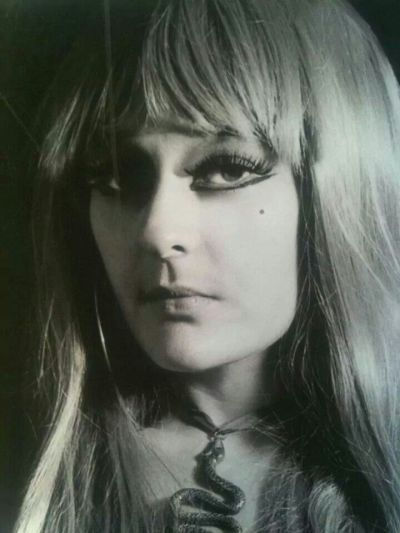
Miss Mercy’s appearance makes the label all the more striking. Like Bara, she shared heavily darkened eyes and stage-like clothing that removed her from conventional ideas of beauty in a deliberate fashion. Miss Mercy didn’t want to appear wholesome or polished, but rather, she preferred to be strange and mysterious. Her mask-like makeup recalled techniques and similarities to Bara’s defining vamp look decades previous. The only difference between the two is that Miss Mercy was translating the vamp from a screen legend into a walking talking being. The old Hollywood vamp had become a rock-n-roll creature.
It's important to note that Miss Mercy wasn’t simply copying Bara’s appearance. The meaning of the look had changed by now. When the vamp first creeped into cinema the excessive sexuality was constructed as a threat. She was the siren who seduced respectable men and led them away from moral order. The vamp was the woman you were meant to fear. Miss Mercy’s vamp persona was emerging in a world and culture that was beginning to question that moral order, and try everything in its power to push it to its absolute limit. While you could argue that groupies were similarly feared by the wives and families of stars who didn’t know what happened backstage, it is also likely that this exaggerated sexual femininity was a declaration of independence, rather than a warning of the consequences of independence.

The GTO’s were proof that Theda Bara’s initially crafted persona and self-invention lived on through the ages. These women weren’t anonymous figures seen in the background of paparazzi photos, they were individuals. They adopted names such as Miss Sparky, Miss Pamela and Miss Mercy, creating identities that were distant from their regular lives. They reinforced these through both physical appearance and actions, making them recognisable in the crowded world of the LA music scene. Changing from an ordinary woman to a named character is on par with Theda Bara, whose transformation from Theodosia Goodman to Theda Bara came as the earliest example of a female celebrity becoming a larger than life fantasy.
Not every member of the GTO’s and not every groupie looked the same. The point is not that every woman was attempting to emulate Bara. Rather, the vamp became one of the foundational female archetypes that girls could borrow from and exaggerate to reinvent it to fit their own tastes. Miss Mercy claimed Bara, while another could draw from a different image of femininity. They could be glamorous, strange, dangerous, sexual, childlike, theatrical, grotesque or sometimes everything all at once. What united them was their freedom and ability to treat appearance as a performance. The groupie’s look was consciously created, and not decided by the men around her.
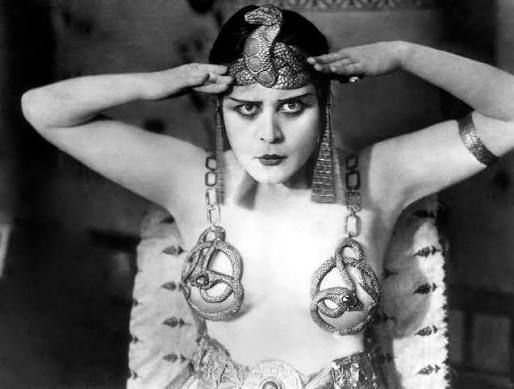
The history of the vamp shows that Theda Bara’s original persona was created and marketed by a film studio to cater to an audience fascinated by the supposed danger of a sexual and exotic woman. Half a century later, women in the counterculture were taking elements of that same image, but changing it for themselves. The dramatic clothes and heavy eyes were deliberately artificial to create a persona, however, the power dynamic had changed. The woman who was once presented as an object of illusion and fascination could now construct and partake in the fantasy herself.
The distance between silent siren Theda Bara and the GTO’s is not quite as great as it may appear at first. Bara’s vamp belonged to an era where women could not be free sexually powerful beings without being portrayed as a dangerous warning of unnatural destruction. But by the late 1960s, the cultural meaning of sex and sexually liberated women were changing, creating more freedom for experimentation. The vamp therefore survived, and she no longer had to be the villain. She could be a groupie. She could be a performer. She could be Miss Mercy.
The vamp had survived without changing. She moved from silent screens to Sunset Strip, running from the fantasies of Hollywood publicity departments into the hands of women willing to play with their own identities. Theda Bara may have acted the vamp while the film was rolling, but for Miss Mercy, she could apply the kohl and decide what the vamp meant for herself.


Comments